
- Dog whiskers (vibrissae) are sensory tools that help dogs navigate, detect nearby objects, and sense air currents and subtle movements.
- They’re highly sensitive because of the nerve-rich follicles beneath the skin, even though the hairs themselves have no nerves.
- Whiskers also protect the eyes and face, triggering a protective blink reflex, and can add clues to your dog’s mood. Read them alongside the rest of your dog's body language, not on their own.
- Don’t trim or pluck them unless a vet advises it. Cut whiskers usually grow back, but pulling one out can be painful.
The whiskers around your dog’s muzzle, eyebrows and chin might seem like just another adorable feature, but they actually serve an important purpose in the way pets experience the world.
So, why do dogs have whiskers? Dog whiskers are sensory tools that help dogs navigate their surroundings, detect nearby objects and protect sensitive areas on their faces. They can even offer clues about how your dog is feeling.
Unlike fur, whiskers have nerve endings that detect subtle changes in the environment. Whether your dog is exploring a dark area, investigating an unfamiliar object or playing outside, her whiskers are constantly gathering valuable sensory information.
Dog whisker anatomy
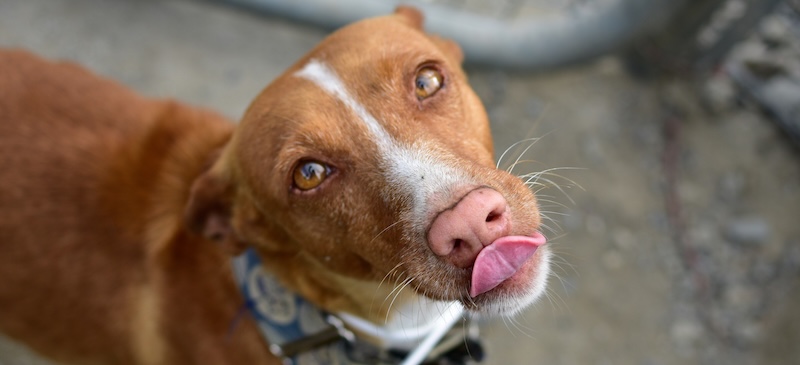
Dog whiskers, scientifically known as vibrissae, are thicker, stiffer, longer hairs than the surrounding fur. They might look similar to ordinary hair, but their structure and function are quite different.
Whiskers grow from follicles deeper in the skin than typical hair follicles. These follicles are surrounded by blood vessels and a network of sensory nerves, making the stiff hairs extra responsive to movement and pressure.
When a whisker brushes against an object or bends in response to movement, it stimulates sensory receptors within the vibrissae follicle. These receptors, much like those found in the anatomy of a dog’s paw, send signals to the brain, allowing your dog to gather information about his environment.
Dogs have several groups of vibrissae that differ slightly from cat whiskers, and they are located in different areas of the face, including:
- Muzzle whiskers: Located along the sides of the snout, these help dogs detect nearby objects and navigate tight spaces.
- Eyebrow whiskers: Found above the eyes, these help protect the eyes by detecting objects approaching the face.
- Cheek whiskers: Positioned along the cheeks, these contribute to spatial awareness.
- Chin whiskers: Located beneath the lower jaw, these help dogs sense objects below their mouths.
Are dog whiskers sensitive?
Yes, dog whiskers are highly sensitive, although the whisker hairs themselves don’t contain nerves. Instead, the sensitivity comes from the nerve endings in the follicles beneath their skin.
Even slight movements of the whiskers can trigger sensory signals that help your dog interpret her environment.
This is important because it explains why touching or moving a dog’s whiskers can cause a reaction, even though the hairs themselves cannot feel pain.
What are dog whiskers for?
Dogs rely on several senses to understand the world, including their powerful sense of smell, hearing and vision. Dog whiskers, much like cat whiskers, provide another layer of sensory information, particularly when objects are close to their faces.
Here are four important ways whiskers help dogs in their everyday lives.
Navigation and spatial awareness
Important functions of dog whiskers are as navigation systems and motion detectors, helping dogs understand the space around them. Whiskers act as touch-sensitive sensors that detect contact or closeness with nearby objects, air currents and subtle movements, helping dogs notice objects before making direct contact.
This additional information is useful because dogs don’t see most colors or objects directly in front of their noses as clearly as objects farther away. Their whiskers help by providing tactile information about what’s nearby, preventing them from running or bumping into things.
Whiskers can also help dogs move in low-light environments, where visual information is limited. Although dogs generally see better than humans in dim lighting, their whiskers provide another way to detect nearby obstacles.
Emotional communication and body language
Your dog’s ears, tail, posture and facial expressions can tell a lot about his emotional state. Interestingly, whiskers can also play a role in canine body language.
Dogs have small muscles connected to their whiskers that allow them to adjust their position. Changes in whisker positioning may indicate different emotions or levels of alertness.
Dogs feeling threatened, fearful or uncomfortable may also flare their whiskers or change their facial expressions to indicate how they’re feeling or engage in behaviors like licking.
Whisker position alone isn’t a reliable indicator of your dog’s mood or emotions. It’s important to consider his entire body language, including his ears, eyes, tail, overall posture and behavior.
Eye and face protection
Whiskers are helpful for exploring the environment, but they also serve a protective function around your dog’s eyes and face. The whiskers above your dog’s eyes, sometimes called supraorbital whiskers, can trigger a protective blink reflex when something approaches or touches them.
Imagine your dog pushing her face into tall grass or investigating a bush. When something brushes against these sensitive hairs, sensory signals may cause your dog to blink or move her head away, reducing the likelihood of debris or other objects from coming into contact with the eyes.
Whiskers around the muzzle and chin also provide valuable information when dogs investigate unfamiliar surfaces or objects, helping them avoid unexpected contact with sensitive facial areas.
Exploring objects up close
Dogs are curious pets, and their whiskers help them investigate objects that are too close for their eyes to examine clearly. When your dog sniffs a new toy, explores a food bowl or investigates something on the ground, his special sensory whiskers provide tactile feedback.
This helps your dog understand an object’s position, shape and how close it is to her face. When dogs lower their heads to investigate their surroundings, whiskers located beneath the chin and around the muzzle can detect objects that might be difficult to see.
Can you cut a dog’s whiskers?
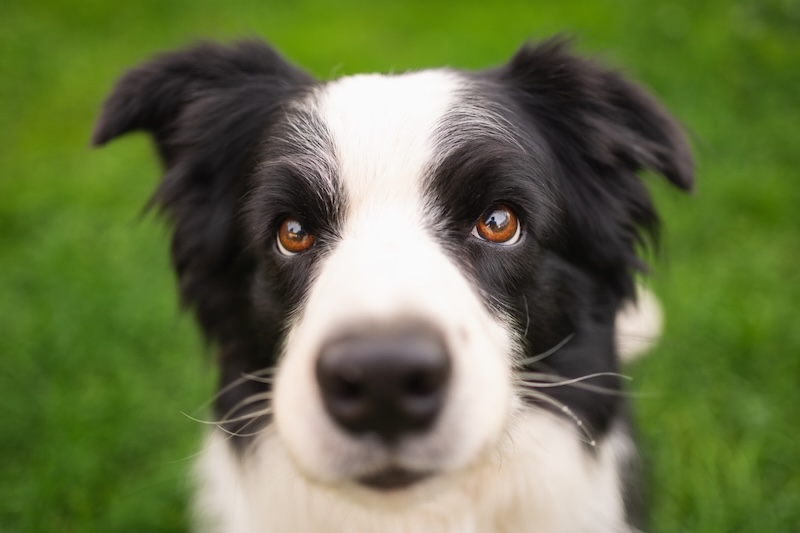
Technically, you can cut a dog’s whiskers, but intentionally trimming or removing them is generally not recommended for pets unless there’s a specific medical reason. Whiskers play an important sensory role, so removing them reduces the information your dog can gather about the world around them.
Does cutting dog whiskers hurt?
Cutting a whisker doesn’t directly cause pain because the visible hair doesn’t contain nerves, just like ordinary fur. Plucking or pulling out a whisker is a different story though.
Whisker follicles contain rooted sensory nerves, so forcibly removing a whisker can be painful or damage the surrounding tissue.
What happens if you cut a dog’s whiskers?
A dog whose whiskers have been trimmed may have more difficulty detecting nearby objects. Some dogs may appear more hesitant when navigating tight spaces or investigating their surroundings. Others may show little noticeable change, especially in familiar environments.
Accidentally trimming your dog’s whiskers doesn’t typically cause permanent damage. In most cases, they’ll grow back.
Should groomers trim dog whiskers?
Some grooming styles involve closely trimming the hair around a dog’s muzzle, which can result in whiskers being shortened. Before your dog’s next grooming appointment, let your groomer know that you’d prefer the whiskers to remain intact.
A professional groomer can work around your dog’s specialized hairs for a trim.
Good nutrition supports your dog from the inside out

Your dog’s whiskers may seem small, but they play a surprisingly important role. From navigating unfamiliar spaces and detecting nearby objects to protecting the eyes and communicating subtle emotional cues, these specialized sensory hairs help dogs interact with the world around them.
In addition to protecting whiskers, a complete and balanced diet provides the foundation for your dog’s lifelong health and well-being. JustFoodForDogs meals, treats, toppers and supplements contain essential pet nutrients like protein, fats, vitamins and minerals to help your dog maintain healthy skin and hair follicles.
While nutrition can’t replace the sensory functions of whiskers, it contributes to overall health and the tissues that support them.
Frequently asked questions
Do all dogs have whiskers?
Yes, all dogs naturally have whiskers, and puppies are born with them, even hairless dog breeds. These specialized sensory hairs are an important part of canine anatomy, regardless of breed, size or coat type. Dogs with short coats often have more visible whiskers, while those with long or curly fur may have whiskers that blend into the surrounding hair.
Do dog whiskers grow back?
Yes, dog whiskers generally grow back after shedding or being cut, as long as the hair follicles are healthy. Regrowth isn't always immediate. It can sometimes take weeks or months for whiskers to fully grow back.
If your dog's whiskers were accidentally trimmed, allow them to regrow naturally, and avoid trimming them again.
Do dog whisker patterns vary by breed?
Yes. Although all dogs have whiskers in similar areas, their length, thickness and arrangement does vary between breeds and individual dogs. Whiskers may be more noticeable on some short-haired dogs, while breeds like schnauzers and poodles have whiskers that are harder to notice.
Why do dogs lose whiskers?
Dogs naturally shed individual whiskers as part of the normal hair growth cycle. Finding an occasional whisker around your home is generally nothing to worry about. Excessive whisker loss, especially when accompanied by facial hair loss, redness, itching or irritated skin may indicate an underlying problem.
Is it OK to touch a dog's whiskers?
Gently touching your dog's whiskers isn't necessarily harmful, but it's important to respect their sensitivity. Whiskers transmit information through highly sensitive follicles, so bending, pulling or tugging them may cause discomfort or irritation.
- Döring D, Müller HE, Franzmeier S, Matiasek K, Blutke A, Reese S. The canine vibrissal system as a highly innervated and functional sensory organ. Sci Rep. 2025 Mar 17;15(1):9212. doi: 10.1038/s41598-025-91629-1. PMID: 40097476; PMCID: PMC11914073. (opens in a new tab)
- Barnes, Courtney, Ryan Llera, and Lynn Buzhardt. Why Do Dogs Have Whiskers? VCA Animal Hospitals, January 30, 2026. (opens in a new tab)
- Mota-Rojas D, Marcet-Rius M, Ogi A, Hernández-Ávalos I, Mariti C, Martínez-Burnes J, Mora-Medina P, Casas A, Domínguez A, Reyes B, Gazzano A. Current Advances in Assessment of Dog's Emotions, Facial Expressions, and Their Use for Clinical Recognition of Pain. Animals (Basel). 2021 Nov 22;11(11):3334. doi: 10.3390/ani11113334. PMID: 34828066; PMCID: PMC8614696. (opens in a new tab)