- Scent masking: Dogs roll in grass mainly to mask or spread their own scent, an instinct traced back to their wild canine ancestors.
- Communication: Rolling also lets dogs leave or pick up scent markers from other animals.
- Comfort: Many dogs roll because it relieves an itch or feels good against their skin.
- Health signal: Frequent rolling paired with redness or scratching can point to allergies or skin irritation that deserves a vet visit.
Few sights charm pet parents like a dog flopping onto the lawn, wriggling on its back and rolling with all four paws in the air. The moment looks funny, and it raises an obvious question: Why do dogs roll in the grass?
This article covers whether the behavior is normal, the instinctual and physical reasons behind it, and when it deserves a closer look.
Is it normal for dogs to roll in the grass?
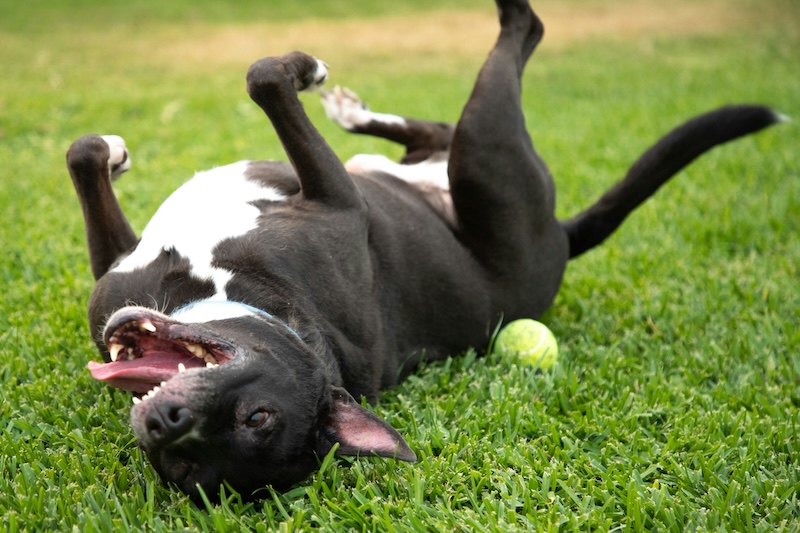
Yes. Rolling on grass is completely normal dog behavior, and most dogs do it at some point. A relaxed, wiggly roll on a lawn is typically harmless.
Whether to allow it depends on where and how often it happens. A clean, shaded patch of lawn is fine. A spot with animal droppings, chemical treatments or a dead animal calls for a quick redirect.
Why does my dog roll in the grass?
Anyone asking “why is my dog rolling in the grass?” will find that several motivations overlap. Some come from instinct, and others come from simple comfort.
Masking their own scent
Wolves and other canine ancestors hunted by stealth. A strong smell from the environment helped a predator sneak up on prey without detection.
Modern dogs carry that instinct, so a dog might roll in grass to cover its own odor with something more ordinary.
Spreading their scent
Dogs also deposit scent. Scent glands in the neck, shoulders and skin leave a personal signature on the ground.
Dogs that rub themselves on grass are marking territory in a quiet, low-key way.
Communicating with other dogs
Dogs communicate largely through smell. Rolling in a patch that another animal has visited lets a dog pick up that animal’s scent and carry it back like a message.
The behavior helps explain why dogs return to the same spot again and again.
Relieving an itch
A dog’s back is hard to reach, and textured grass works like a natural back scratcher. A dog might roll to scratch an itchy spot, shake off loose hair from shedding or ease mild irritation.
This kind of itch relief is usually brief and doesn’t repeat endlessly.
Simple physical pleasure
Plenty of rolling is pure joy. Cool, damp grass on a hot day feels good against the coat.
Dogs that like rolling in grass often wriggle, groan and stretch with obvious enjoyment, and the sensation alone can explain the behavior.
Playing and social bonding
Rolling also shows excitement. A playful pup may flop down during a game, and many dogs roll alongside a friend.
Dogs that roll on grass in the middle of play usually look loose, bouncy and relaxed.
Should I stop my dog from rolling in the grass?
Usually not. Happy, harmless rolling gives dogs a way to scratch, stretch and enjoy themselves.
Rolling in dead animals or waste are exceptions. Those habits expose a dog to bacteria, parasites and a truly stinky smell, so they are worth discouraging for hygiene and safety reasons.
Signs your dog’s grass rolling needs a vet visit
Rolling is ordinary most of the time. A few patterns suggest that the behavior has become a health issue, and a veterinarian can sort out the cause.
Frequent or excessive rolling
A dog that rolls constantly, seems frantic or cannot settle may be dealing with discomfort instead of enjoyment. Obsessive or compulsive rolling, especially when a dog interrupts meals or play to do it, is unusual and worth mentioning to a vet.
Redness, hair loss or scratching
Look closely at the skin. Redness, hair loss, scabs, or a dog biting and licking its paws and flanks point toward irritation.
Possible causes include fleas and ticks, skin allergies, dry skin and skin infections.
Rolling that comes with these signs, or with a strong odor or greasy coat, calls for a veterinary exam. A vet can check for parasites, test for allergies and recommend treatment so the itch does not keep returning.
Rolling combined with other changes
Pay attention to rolling that accompanies ear scratching, head shaking or sudden changes in the coat. An ear problem or skin problem can drive a dog to rub aggressively against anything rough.
When several signs appear together, a veterinary visit makes sense.
How to manage or redirect grass rolling
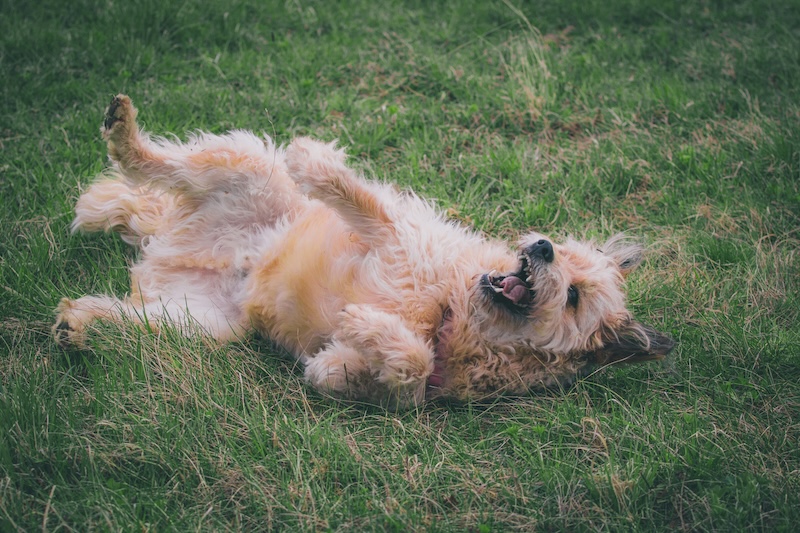
When rolling becomes messy or unwanted, a few practical steps help.
- Create a designated rolling spot. Choose a clean, shaded lawn patch free of pesticides, fertilizers and other chemicals. Dogs that have a safe place to roll often stop seeking out worse ones.
- Redirect with positive reinforcement. When a dog starts to sniff toward something stinky, call it away, and reward it with a treat or toy. Praise the dog for choosing the better option.
- Use leash control on walks. A short leash prevents a dog from reaching dead animals, droppings or other hazards. Watch for the sniff-then-shoulder-drop pattern that signals a roll is coming.
- Bathe only when necessary. Frequent baths strip natural oils and can cause dry, irritated skin. Rinse off dirt with water, and save full baths for truly smelly rolls.
Support your dog’s skin and coat with better nutrition
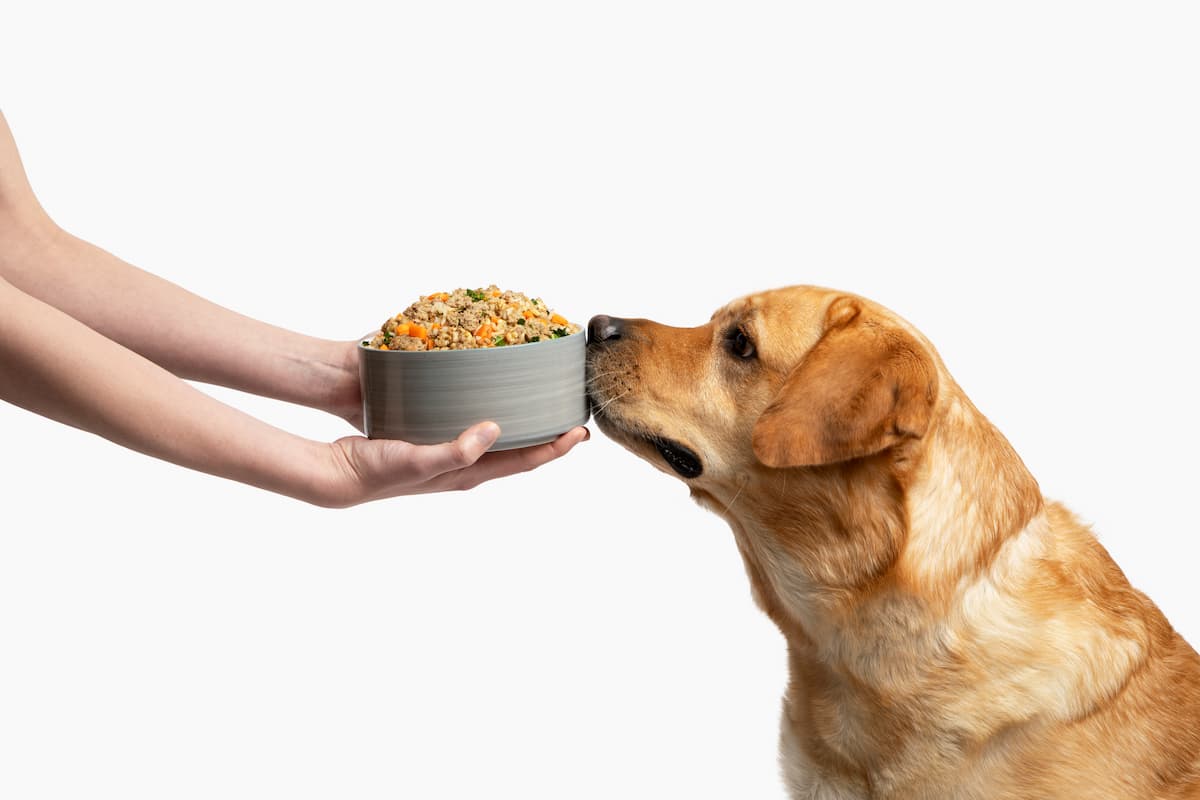
Rolling, scratching and itching all connect back to the skin. A healthy skin barrier helps a dog resist dryness, irritation and flare-ups, and good overall nutrition supports that barrier from the inside.
A balanced diet with quality protein and healthy fats keeps the coat glossy and the skin comfortable, so a dog is less likely to scratch constantly. Pet parents who notice dull fur, heavy shedding or itchy skin can ask a veterinarian whether the dog’s diet might need adjusting.
Final thoughts
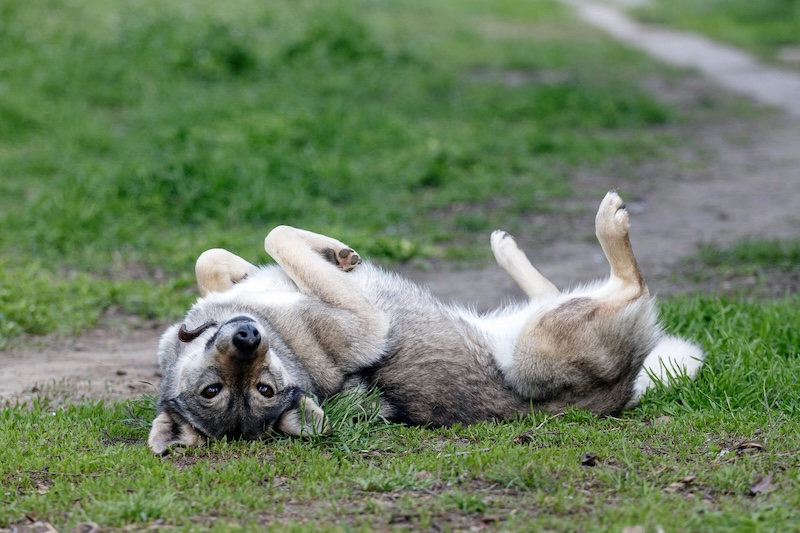
Dogs roll in the grass for reasons that range from ancient instinct to simple enjoyment. They mask and spread scent, share information, scratch an itch, and play.
Most rolling is normal and harmless, and a clean patch of lawn gives dogs a safe outlet.
Pet parents should watch for frantic rolling, redness, hair loss or constant scratching, since those signs call for a vet visit.
Good nutrition and sensible management keep a dog’s skin and coat healthy … and keep the next roll on the grass a happy one.
Frequently asked questions
Why does my dog roll in the grass right after a bath?
Many dogs dislike the fresh, soapy smell that follows a bath. Rolling replaces that scent with a more natural one, which ties back to the scent-masking instinct. The behavior is harmless, and a quick rub on the lawn usually ends it.
Why do dogs roll in dead animals or other unpleasant things?
The same scent-masking instinct extends to strong, pungent odors. A dog finds a dead animal or droppings and wears the smell like camouflage. The habit is worth discouraging because of the bacteria and parasites involved. Teach a solid “leave it” command and keep a leash handy.
Should you stop your dog from rolling in the grass?
Happy, harmless rolling generally does not need to stop. Discourage it only when a dog seeks out dead animals, waste or chemically treated lawns, since those pose sanitary and safety risks.
- Ryon, J., Fentress, J. C., Harrington, F. H., & Bragdon, S. (1986). Scent rubbing in wolves (Canis lupus): The effect of novelty. Canadian Journal of Zoology, 64(3), 573–577. (opens in a new tab)
- Stępniak KM, Diserens TA, Szewczyk M, Mysłajek RW, Kuijper DPJ. Domestic Dog Scent Marks Trigger a Behavioural Response in Wild Wolves. Ecol Evol. 2025 Jul 9;15(7):e71364. doi: 10.1002/ece3.71364. PMID: 40635788; PMCID: PMC12238768. (opens in a new tab)
- Allen, J. J., Bekoff, M., & Crabtree, R. L. (1999). An observational study of coyote (Canis latrans) scent-marking and territoriality in Yellowstone National Park. Ethology, 105(4), 289–302. (opens in a new tab)
- Boić N, Jukić N, Mikuška A, Bjedov D, Kovačić M, Šalika-Todorović T, Sudarić Bogojević M. Preliminary Study of Scent Rolling in Captive Wolves (Canis lupus L. 1758) in Response to Olfactory Enrichment. Biology (Basel). 2024 Jun 6;13(6):422. doi: 10.3390/biology13060422. PMID: 38927302; PMCID: PMC11200557. (opens in a new tab)
- Green Family Veterinary Practice. (2026, May 26). How bathing habits can affect your dog's skin and coat health. (opens in a new tab)