
- Dogs have 28 puppy teeth and 42 adult teeth, and the count stays the same across most breeds.
- Adults have 12 incisors, four canines, 16 premolars and 10 molars; puppies have no molars.
- Baby teeth start falling out at about 3 to 4 months, and most dogs have a full adult set by 6 to 7 months.
- Adult teeth have to last a lifetime, so daily brushing, dental chews and regular vet check-ups matter.
Pet parents often feel curious about their dogs’ teeth. Maybe you’re watching a puppy lose its first tiny teeth and wondering what’s normal. Maybe you just want to understand what’s inside your dog’s mouth.
Either way, you’re asking a smart question. This post covers how many teeth dogs have, what each tooth type does and how you can help keep those teeth healthy for life.
How many teeth do dogs have?
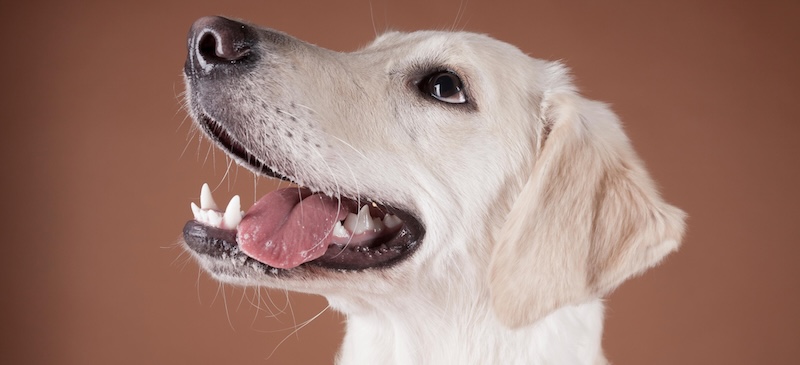
Dogs develop two sets of teeth over their lifetimes. A puppy grows 28 puppy teeth, and those eventually give way to 42 permanent adult teeth. That’s far more than the 32 teeth an adult human has.
So how many sets of teeth do dogs have? Two, just like people.
The first set, called deciduous teeth, falls out. The second set has to last the rest of your dog’s life.
When someone asks how many teeth do dogs have, the answer depends on age: 28 for a puppy and 42 for an adult. The number of teeth in dogs also stays the same across most breeds, whether you own a chihuahua or a great dane.
Why canine dental anatomy matters for your dog’s health
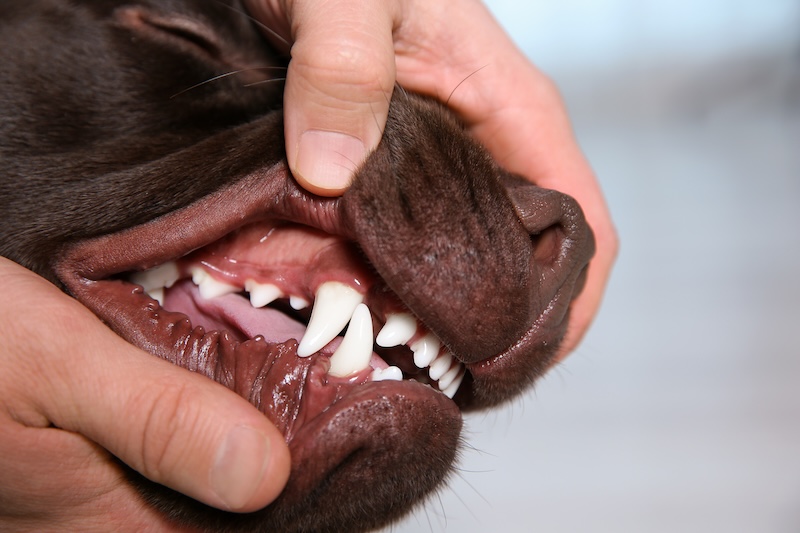
Understanding your dog’s dental anatomy helps you catch problems early. Dental issues can cause pain, make chewing difficult and even affect your dog’s overall health because bacteria from the mouth can travel through the body, according to Fairview Veterinary Hospital.
Dogs can’t tell you their mouths hurt, so they often hide discomfort by eating less or chewing on one side. Knowing what’s normal puts you in a better position to spot what isn’t.
Here’s how that knowledge helps:
- Recognizing early signs of dental problems. Red gums, bad breath, drooling or a chipped tooth all stand out more when you know what a healthy mouth looks like.
- Knowing where tartar builds up. Plaque and tartar collect most heavily on the large premolars and molars at the back of the mouth, so you’ll know where to look.
- Supporting effective brushing. When you know each tooth’s location, you can reach every surface and brush more thoroughly.
- Communicating clearly with your veterinarian. You can describe exactly which tooth worries you, and your vet can respond faster.
If you notice signs of dental disease, call your veterinarian rather than waiting. Small problems become painful ones quickly.
Types of dog teeth
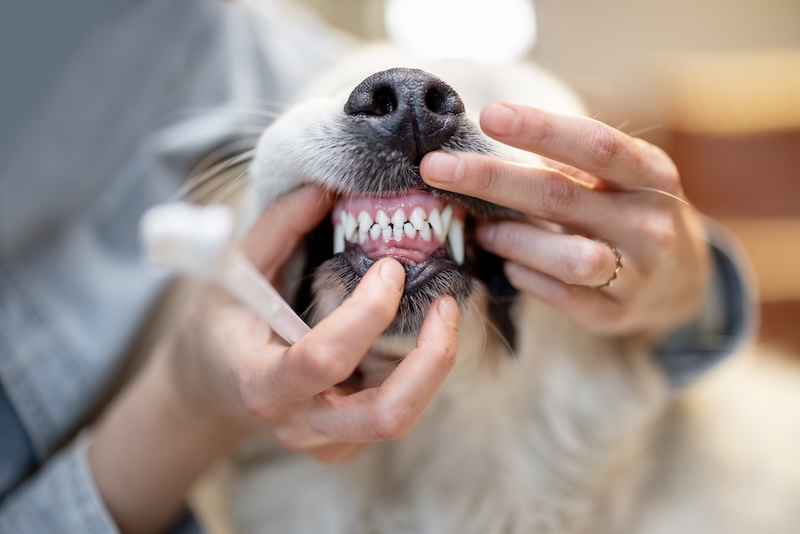
Dog teeth fall into four types, and each type of tooth does a different job. Together, these types of teeth let your dog tear, slice and crush food. Adult dogs have 42 teeth in total.
Incisors
Dogs have 12 incisors: six on the upper jaw and six on the lower jaw. These small teeth sit at the front of the mouth. Your dog uses them to nibble meat off bones and groom themselves.
Canines
Dogs have four canines: two on the upper jaw and two on the lower jaw. People often call them fangs.
These long, pointed canine teeth help your dog grip, hold and tear food or toys. They also help your dog carry things around.
Deep roots make them strong, but a canine can still break if your dog bites something too hard.
Premolars
Adult dogs have 16 premolars, eight on top and eight on the bottom. These teeth have sharp, pointed edges that shear and slice food into smaller pieces. The fourth upper premolar and first lower molar work together like scissors.
Meanwhile, puppies have 12 premolars, with six upper and six lower, and they typically have 28 baby teeth, which start to emerge around three to four weeks after birth.
Molars
Adults have 10 molars: four on the upper jaw and six on the lower jaw. These flat, broad teeth crush and grind kibble and other hard foods.
Puppies have no molars, as they only appear with the permanent set. Because molars sit so far back, tartar often builds there unnoticed.
Add them up, and you get 12 incisors, four canines, 16 premolars and 10 molars, which equals 42.
Puppy teeth vs. adult teeth
When you compare puppy teeth vs. adult teeth, several differences stand out.
Puppy teeth
Puppy teeth first erupt when a pup is about 3 to 4 weeks old. The full set of 28 is typically in place by around eight weeks.
These small teeth look sharp and thin, and they don’t last long. Puppies typically begin losing their baby teeth at 3 to 4 months.
Adult teeth
Permanent teeth begin coming in at roughly 3 to 7 months of age. Adult teeth are larger, stronger and less sharp.
The upper jaw holds 20 adult teeth, while the lower jaw holds 22. Most dogs have a full set of 42 teeth by 6 to 7 months.
Key differences at a glance:
- Puppies have 28 teeth, while adults have 42.
- Puppy teeth are smaller and sharper, while adult teeth are larger and sturdier.
- Puppies have no molars, while adults have 10.
- Puppy teeth fall out, while adult teeth must last a lifetime, which makes dental care essential.
Retained baby teeth, discussed below, can complicate this switch, so watch the process closely. Expect mild drooling, sore gums and extra chewing while your puppy teethes.
Offer safe chew toys during this stage so your puppy has something appropriate to chew instead of your furniture.
Do dogs lose teeth?
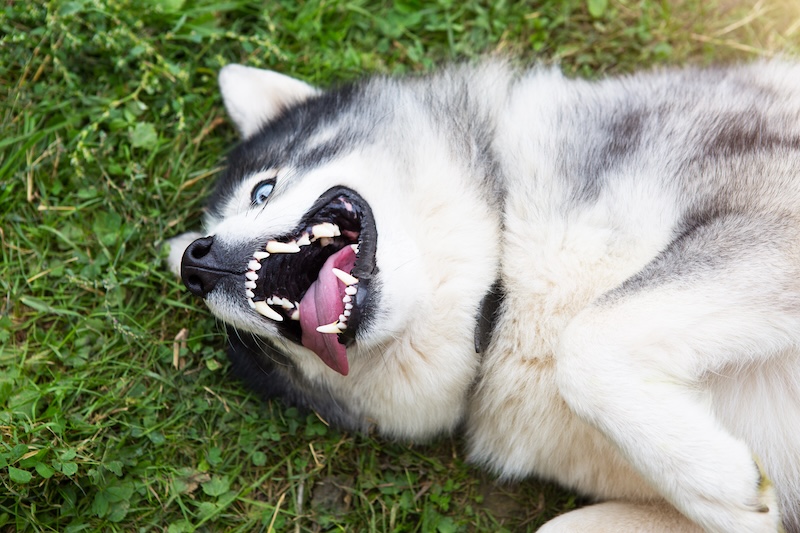
Yes, but the reason matters. Losing puppy teeth is completely normal. A pup might swallow them or leave them in a toy, and you may see a little blood on a chew.
Losing adult teeth, however, usually signals a problem that needs attention. The most common causes include:
- Periodontal disease. This is the top reason adult dogs lose teeth. Plaque hardens into tartar, inflames the gums, and eventually destroys the tissue and bone that hold each tooth in place. It begins as gingivitis, which a veterinarian can often help treat with professional care, notes the Merck Veterinary Manual. Breed, age and diet all influence risk, and small breeds often develop periodontal disease sooner.
- Trauma. Chewing on dog things that are too hard, like antlers, bones or rocks, can fracture or knock out a tooth. A fall or a blow to the face can do the same.
- Tooth decay. Tooth decay, also known as a dental cary or cavity, is rare in dogs but occasionally still happens. Decay weakens the tooth until it breaks or loosens.
Untreated dental issues can also let bacteria spread, as noted by research published in Veterinary Sciences. If your adult dog loses a tooth, has a loose tooth or has bleeding gums, schedule a vet visit promptly.
Tips to keep your dog’s teeth healthy
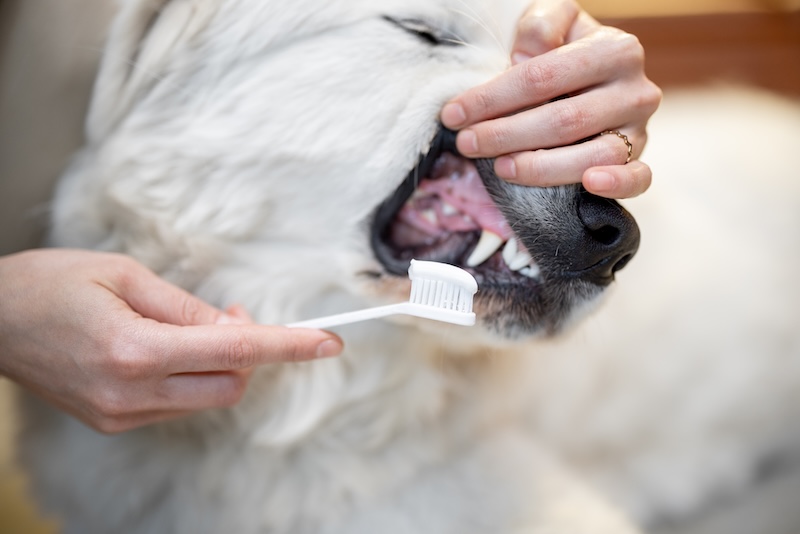
Good habits at home and at the clinic can support dental health and maintain strong teeth. Try these:
- Brush regularly. Brush your dog’s teeth with dog-specific toothpaste, ideally every day. Never use human toothpaste, because many contain ingredients that harm dogs. Brushing removes plaque before it hardens into tartar.
- Offer dental chews. Dental chews and toys designed to reduce plaque give your dog a safe outlet for chewing. Choose a size that suits your dog, and skip hard bones that can crack teeth.
- Schedule veterinary dental check-ups. Your veterinarian will examine the gums and each tooth during an exam and can recommend a professional dental cleaning under anesthesia. Cleanings reach below the gumline, where brushing can’t.
- Feed a balanced diet. A diet with adequate calcium and other nutrients can support strong teeth and bones. You may have heard that crunchy kibble can help scrape away some plaque, but kibble can’t replace brushing and cannot reliably remove plaque from teeth.
- Check the mouth weekly. Lift your dog’s lips and look for red gums, loose or broken teeth, and bad breath. Catching changes early makes dental care simpler.
Nutrition plays a role in your dog’s dental health too
Dental care starts at home, but it doesn’t end at the toothbrush. Nutrition shapes your dog’s whole body, including a healthy mouth.
A balanced diet gives your dog the calcium, protein and vitamins that build strong teeth, firm gums and sturdy bones. When your dog feels good, your dog chews comfortably, plays energetically and enjoys life.
To recap, dogs have 28 puppy teeth and 42 adult teeth, and every one of them deserves care. Pair daily brushing and regular vet visits with thoughtful feeding, and you can support your dog’s comfort from nose to tail.
Final thoughts
Dogs first grow 28 puppy teeth, and then 42 permanent adult teeth, which have to last a lifetime. Incisors, canines, premolars and molars each play a role, so protect them all.
Brush often, offer dental chews, schedule veterinary dental visits and feed a balanced diet. If your dog loses an adult tooth or shows signs of dental disease, call your vet right away. Healthy teeth mean a happier, more comfortable dog.
Frequently asked questions
Do dogs have wisdom teeth?
No. Dogs don’t have wisdom teeth as humans do. Their last molars at the back of the mouth are the final teeth to erupt, completing the adult set of 42. Your veterinarian can confirm which tooth is which if you ever feel unsure.
How many teeth do small dogs have?
Small dogs have the same 42 teeth as large dogs, just packed into a smaller mouth. That crowding makes small breeds more prone to tartar buildup, periodontal disease and retained baby teeth, so they benefit from extra dental care.
What are retained teeth?
Retained teeth are baby teeth that stay in place after the permanent tooth erupts, creating extra teeth. They often involve the canine teeth. Retained teeth trap food and encourage plaque formation, so veterinarians, like those at CVS Vets, may recommend extraction.
- U.S. Department of Agriculture, Animal and Plant Health Inspection Service. “Aging Puppies by Teeth.” USDA APHIS, 2023. (opens in a new tab)
- Enlund KB, Brunius C, Hanson J, Hagman R, Höglund OV, Gustås P, Pettersson A. Dog Owners' Perspectives on Canine Dental Health-A Questionnaire Study in Sweden. Front Vet Sci. 2020 Jun 9;7:298. doi: 10.3389/fvets.2020.00298. PMID: 32582779; PMCID: PMC7297050. (opens in a new tab)
- The Editors of Encyclopaedia Britannica. “Teeth.” Encyclopaedia Britannica. (opens in a new tab)
- Greencross Vets. “Puppy Teething.” Greencross Vets. (opens in a new tab)
- Taylor, Leah. “The ‘Tooth’ Of The Matter: Why Pet Dental Care Is So Important.” Texas A&M University College of Veterinary Medicine & Biomedical Sciences, 2026. (opens in a new tab)
- Reiter, Alexander M. “Dental Disorders of Dogs.” Merck Veterinary Manual, 2025. (opens in a new tab)
- Yu JS, Kim M, Cho IH, Sim YM, Hwang YS. Evidence Supporting Oral Hygiene Management by Owners through a Genetic Analysis of Dental Plaque Bacteria in Dogs. Vet Sci. 2024 Feb 19;11(2):96. doi: 10.3390/vetsci11020096. PMID: 38393114; PMCID: PMC10893504. (opens in a new tab)
- “Retained Baby Teeth in Dogs.” CVS Vets. 2026. (opens in a new tab)