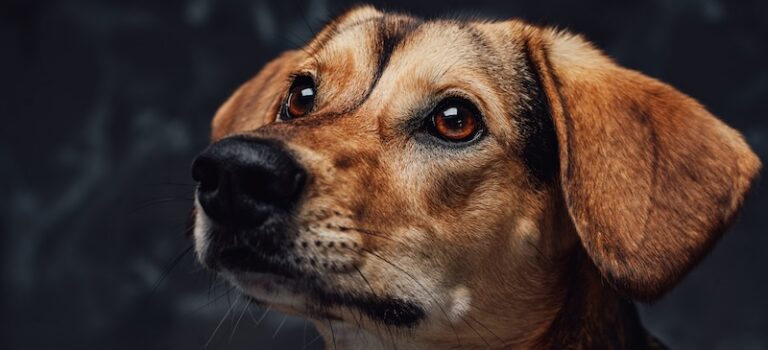
- Dogs can make smile-like expressions, usually a relaxed, slightly open mouth with a visible tongue, but these aren’t the same as human smiles.
- A grin signals comfort only when paired with soft eyes and loose, wiggly body language. An open mouth alone doesn’t mean a dog is happy.
- Lips pulled tightly back, pinned ears, and a stiff or crouched body point to a fear grimace, not a smile. A “guilty” grin is a response to your voice and body language, not a confession.
- Read the whole dog: mouth, eyes, ears, tail and posture, compared with what’s normal for your dog.
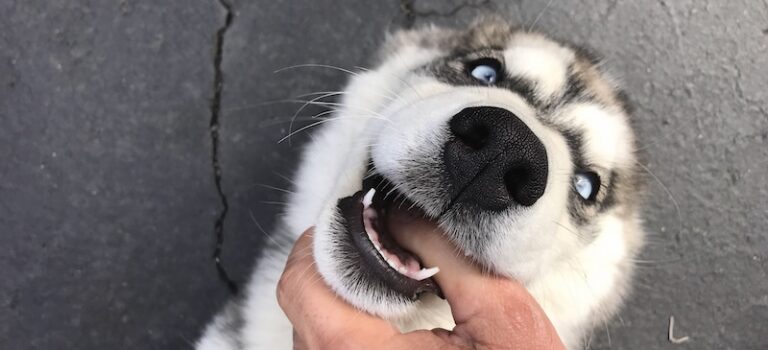
When your dog lies upside down for a belly rub, is that a smile you see on her face? Along with the relaxed body language, that goofy grin looks like a smile, doesn’t it? But a dog’s grin can mean different things, and the face only tells part of the story.
Dogs can make expressions that resemble smiles, especially when they’re relaxed or playing, but they’re not the same as human smiles.
In this article, you’ll learn what’s behind that open-mouthed expression, the different types of canine grins and how to tell if your dog is happy.
Can dogs really smile?
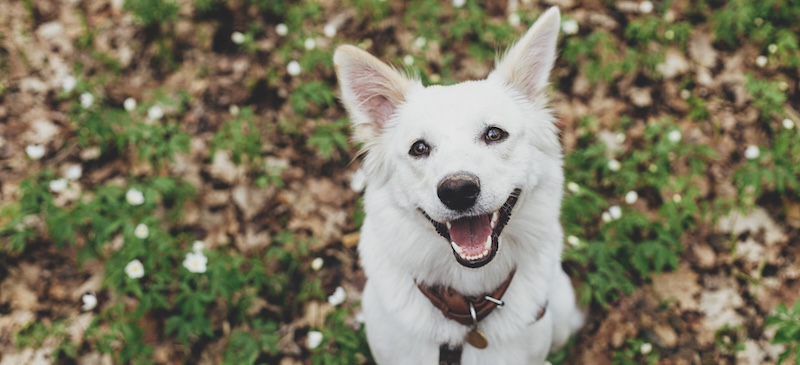
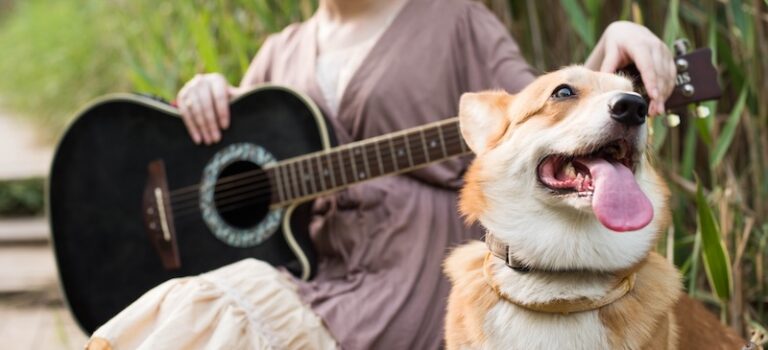
A dog smile can look like a human grin, with a relaxed, slightly open mouth and a visible tongue. When it accompanies soft eyes and loose body language, it can signal contentment and relaxation. Purdue University’s College of Veterinary Medicine veterinarians identify these as signs of a relaxed pooch.
However, if your dog’s body language is stiff or he is turning away from you, he may be in discomfort. You know your dog, so watch for such typical signs of stress.
Why dogs smile: the science and evolution behind it
How do dogs smile? Like humans, they use facial muscles to move their lips and turn up the corners of their mouths. These create that grinning expression.
Those muscles also offer clues about how dogs’ communication changed as they moved into our homes and took over our beds.
Researchers at Duquesne University and Slippery Rock University compared facial-muscle tissue from six dogs and four gray wolves. The dogs’ sampled muscles generally had more fast-twitch fibers, which help produce quick facial movements.
That difference offered a clue to how living alongside humans may have changed dogs’ expressions, though it doesn’t tell us whether your pooch’s grin means she’s happy.
Learning may also play a role because a dog who gets attention for a grin may learn to repeat it.
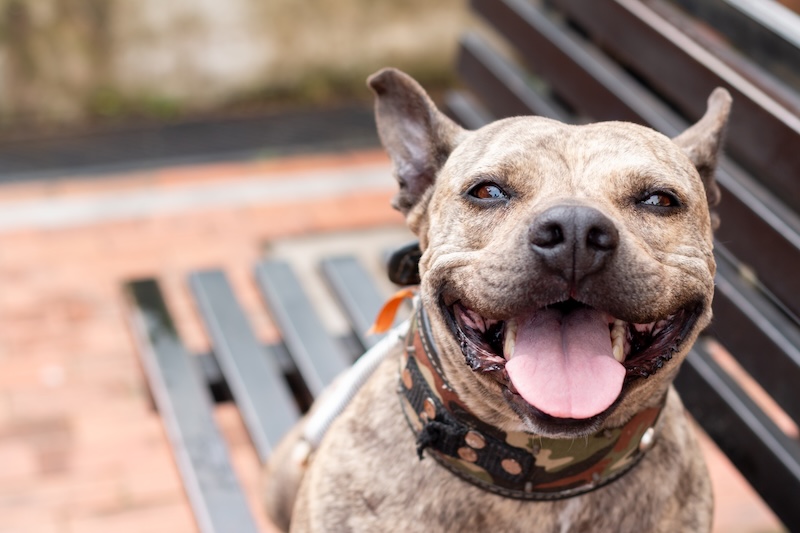
Types of dog smiles and what each one means
Dogs can have different types of smiles depending on what’s going on. Your pup might look blissful rolling around in something stinky with his tongue hanging out the side of his open mouth and have a completely different smile when you come home from work.
Relaxed, happy smile
If your dog’s mouth hangs open and her tongue peeks out with easy, wiggly body language, those are classic signs of a comfortable dog.
You might see this expression when your dog brings you a toy to play with or sploots beside you while you watch TV. If your pup always steals your spot or follows you everywhere, look to his body language and expression for clues as to how he’s feeling.
Submissive or guilty grin
Some dogs pull their lips back, revealing their front teeth. This can be an appeasement gesture if it’s accompanied by a lowered head, soft eyes and a loose body.
ASPCApro recommends looking at your dog’s overall body language to assess how she feels. If your dog is also licking you, she may be looking for affection.
Why do dogs smile when guilty? That apparent grin may be a response to your voice or body language.
A crouching dog with a lowered head next to the chewed sneaker isn’t necessarily feeling guilty or confessing. He’s responding to you.
Fear grimace
If a dog’s lips are pulled tightly back, it can look a little like a smile.
What does the dog’s accompanying body language look like? Pinned-back ears and a crouched or stiff body indicate a stressed, unhappy dog.
Sometimes fear and submission can overlap. If you’re holding your dog for a photo and she looks away and stiffens, it’s best to give your dog a break.
How to tell if your dog is happy or stressed
Learn to read canine body language, and you’ll understand a lot more subtle cues. Your dog’s mouth, ears, tail position and more tell a story.
Signs of a happy, relaxed dog
- Relaxed mouth: Your dog’s mouth may hang slightly open with her tongue visible, though a comfortable dog can also keep it closed. Clues are loose lips and a relaxed muzzle.
- Soft, blinking eyes: A gentle gaze says your dog is relaxed.
- Loose, wagging tail: Your pup’s tail is in its normal position or wagging in broad, easy strokes. Your dog doesn’t have to wag constantly to be happy and content.
- Relaxed, neutral ears: Your dog’s ears are in their usual position.
- Loose, wiggly body posture: A relaxed dog moves easily and might come to you for pets or play.
Your dog’s normal appearance matters, too. A husky’s tail naturally curls upward, while a German shepherd’s ears usually stand upright. Those features alone don’t mean either dog is tense.
Watch for changes from their typical posture and how they react to their environment. Those signals can give you the clues you need.
Signs of a stressed or fearful dog
Discomfort can be quiet. If you notice your dog becoming still or keeps turning away even if letting someone pet him, he may need space.
ASPCApro recommends watching for these signals:
- Tight mouth or rapid, tense panting: Tight lips or lips pulled back are classic signs of doggie stress. Panting that doesn’t fit recent activity or warm temperatures can also indicate stress.
- Whites of the eyes showing: Often called “whale eye,” if your dog turns his head while continuing to watch from the side, that’s another indication he’s not feeling relaxed.
- Tucked or stiff tail: Frightened dogs often tuck their tails between their legs, close to their bellies, for safety. They might also hold their tails straight and rigid with short, tight wags.
- Ears pinned back: Ears pressed tight against the head can indicate fear, especially if it comes with a tense body or other signs.
- Stiff, crouched or frozen body: A frightened dog tends to stiffen. She may lean away, crouch down or go rigid.
Repeated yawning, a tense body and looking away are all signs of discomfort in dogs. If you see any of these signs of discomfort, it’s a good idea to give your dog space.
Good nutrition supports a happy dog
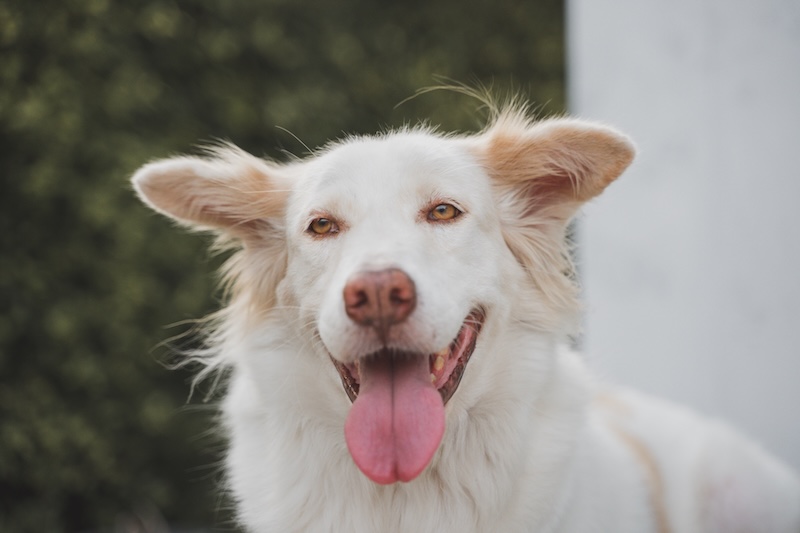
Your dog’s grin is a clue to how he’s feeling. His eyes, ears and other body language help you understand when your dog needs some time alone and when he’s ready to play or snuggle.
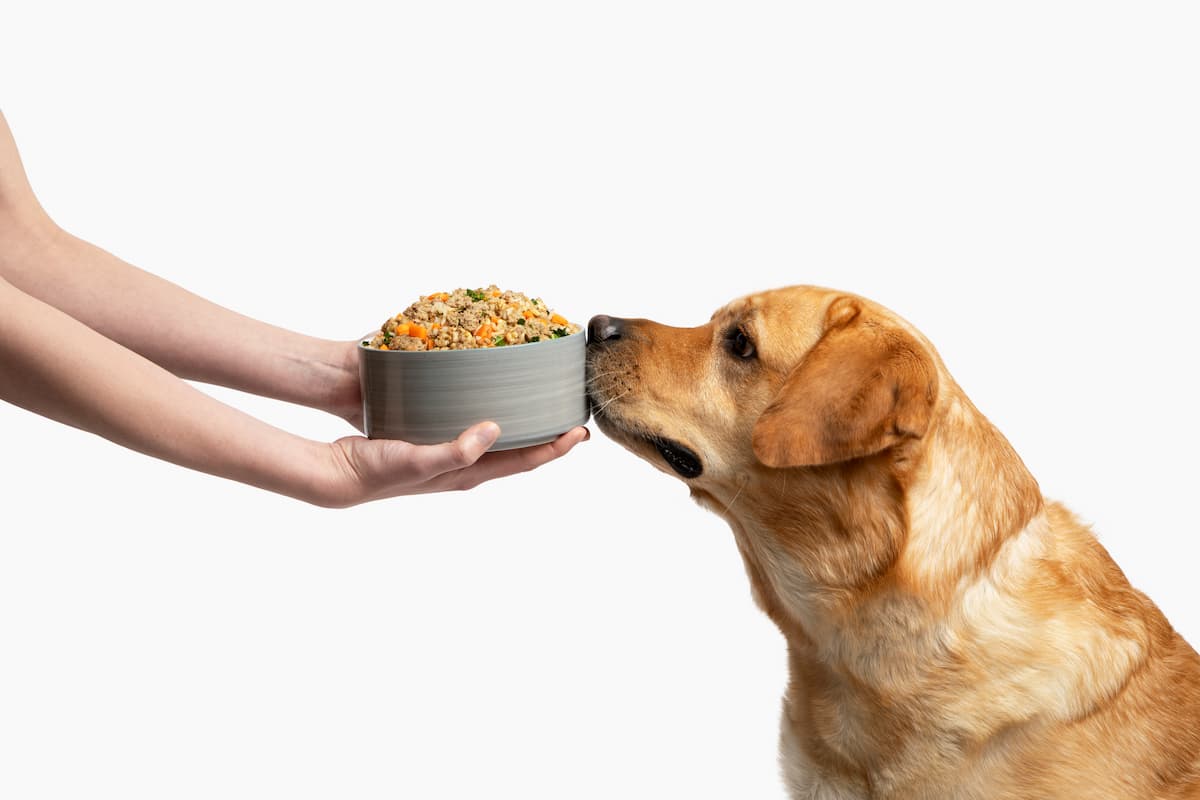
Supporting your dog’s comfort also means taking care of her exercise and nutrition needs. The AAFCO recommends choosing a complete and balanced food appropriate for your dog’s life stage.
A growing puppy has different nutritional needs from an adult dog, so check the nutritional adequacy statement on the label of the food you choose.
For a closer look at what a balanced diet provides, explore our guide to the essential nutrients dogs need.
Frequently asked questions
Do dogs smile when they’re happy?
They can! A relaxed, open mouth paired with a loose body and soft eyes can signal your pup’s comfort.
However, an open mouth alone doesn’t mean your dog is happy. Learn to understand your dog’s body language.
Do dogs smile at other dogs or only at people?
Dogs show smile-like expressions around other dogs, too. During play, they may use a relaxed, open-mouth “play face” alongside bouncy movements and play bows. Recent research examined this expression across dog breeds and wolves, so canine grins aren’t reserved for us.
Do dogs mimic our smiles when we smile at them?
Your dog can respond to your expression without copying it. Research shows dogs use information from human emotional expressions, but that doesn’t establish that they imitate our smiles. A loose, wiggly response may tell you a dog is enjoying the interaction, even without a matching grin.
- Canine Body Language. Purdue University, Canine Welfare Science. (opens in a new tab)
- Burrows AM, Smith LW, Downing SE, Omstead KM, Smith TD. Evolutionary divergence of facial muscle physiology between domestic dogs and wolves. Anat Rec (Hoboken). 2025 May;308(5):1369-1377. doi: 10.1002/ar.25580. Epub 2024 Oct 3. PMID: 39360643; PMCID: PMC11967504. (opens in a new tab)
- Canine Body Language Tips. ASPCApro. (opens in a new tab)
- Selecting the Right Pet Food. AAFCO. (opens in a new tab)
- Maglieri, V. (2025). Facial expressivity in domestic dogs: a functional analysis of the relaxed open mouth across breeds. Behaviour, 163(1), 15-36. https://doi.org/10.1163/1568539X-bja10343 (opens in a new tab)
- Albuquerque N, Resende B. Dogs functionally respond to and use emotional information from human expressions. Evol Hum Sci. 2022 Dec 6;5:e2. doi: 10.1017/ehs.2022.57. PMID: 37587944; PMCID: PMC10426098. (opens in a new tab)