- To get a dog to stop biting, teach bite inhibition, redirect to toys or chews, and reward calm behavior with small treats. Everyone in the household should follow the same rules because puppies learn by repetition.
- Most puppy nipping is play, teething or overexcitement. Loose, bouncy body language and brief mouthing are typical of play. Stiffening, a hard stare, lifted lips, growling or snapping can signal fear, pain or guarding.
- Six techniques help: bite inhibition, redirection, positive reinforcement, exercise and mental stimulation, a home set up for gentle play, and professional help when needed.
- Puppies often start nipping around 8 weeks of age, and most have adult teeth by about 6 months. Nipping may continue past that without consistent training. If biting starts suddenly or gets worse, call your veterinarian.
You put your phone down and start playing with your pup. He grabs your sleeve with his teeth and won’t let go, so you offer a toy as a distraction.
Next thing you know, ouch! Those sharp teeth connect with your fingers.
Biting and nipping are among the most common challenges pet parents face.
Puppy biting is common, and even adult dogs can continue play biting as they grow older. To help your dog stop biting, start by understanding the difference between playful mouthing and biting linked to fear, pain or guarding.
In this article, we’ll walk you through the different types of dog biting, how to tell the difference between normal nipping and more serious behavior, and step-by-step techniques to redirect your dog’s teeth.
Why do dogs bite?
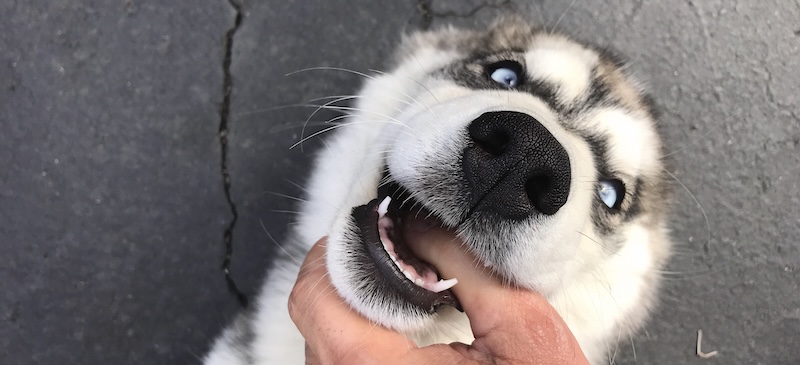
What happened just before the bite? Was your dog riled up from an exciting game of tug? Or was your hand near the food bowl or touching a sore paw?
The latter two situations are more concerning, and those seconds before teeth make contact tell a story. Common reasons for biting include:
- Play and exploration: Puppies investigate the world with their mouths. Adult dogs may also use their mouths during play, especially if you or other household members encouraged hand wrestling.
- Teething discomfort: When a puppy’s teeth are coming in, she may want to chew everything. Nipping your hands during a game is often playful mouthing, similar to how puppies play with their littermates. Your puppy is learning how to interact gently.
- Attention-seeking or overexcitement: Does your pup want your attention? Grabbing your sleeve between his teeth will get it. It may also make for a fun game if you squeal or wave your hands around (at least, from the dog’s point of view).
- Fear, pain or frustration: Fearful dogs often bite to create distance or protect food or other objects. Cornell veterinary experts identify uncharacteristic snapping or growling as possible signs of pain.
- A habit in adult dogs that never learned bite inhibition as puppies: Your adult dog may nip because he enjoys the attention or because he was never taught otherwise. Gentle nibbling can happen during playtime, but watch the whole dog’s body language. As with licking, the behavior’s meaning depends on the context.
Playful nipping vs. aggressive biting: Knowing the difference
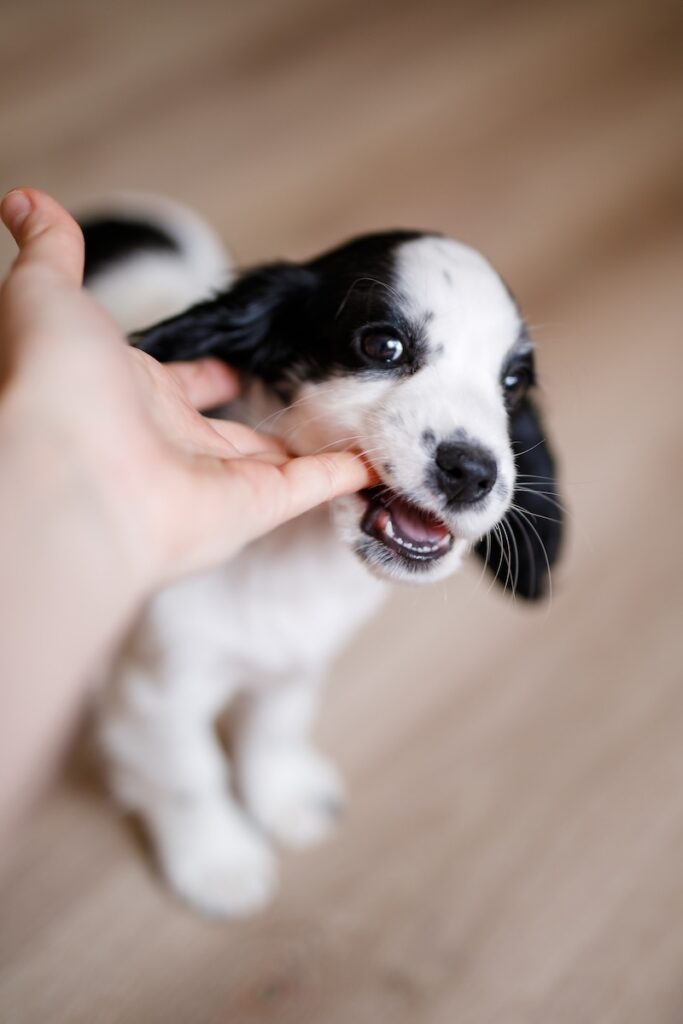
Even a playful dog nip can hurt, and sometimes dogs send mixed messages like wagging their tails while nipping. Here’s what to look for:
Signs your dog is nipping playfully
Your dog might think playful biting is part of the game because that’s what puppies do when they’re together. Then, if someone in your home encourages mouthy play, it keeps the trend going.
Here’s the body language to look for:
- Loose, bouncy movements, often with a play bow.
- A clear play context, such as a game or excited greeting.
- Brief mouthing and release, rather than a tense, sustained grip.
These clues don’t make biting harmless. Biting can still hurt, but your dog doesn’t mean to hurt you.
Signs your dog may be biting aggressively
Aggressive biting is a different matter. Your dog’s body language will be completely different from the playful context above.
Instead of loose, happy body language, look for:
- Freezing or stiffening body language when approached.
- Hard staring, lifted lips, growling or snapping.
- Other signs of discomfort include flattened ears, lip licking, raised hackles or showing the whites of the eyes.
- Repeated, escalating or bites meant to injure, especially during handling or near valued objects.
A dog that suddenly becomes very still can indicate danger. If the still body is accompanied by a hard stare and growling, step away if possible.
If “my dog keeps biting me aggressively” describes your situation, contact your veterinarian immediately. Whatever you do, don’t grab a collar, pry away an object or punish your dog for growling, as growling is a warning mechanism.
How to get a dog to stop biting: 6 techniques
These training steps address puppy nipping and playful mouthing. If your dog’s behavior relates to fear and guarding rather than play, talk with your veterinarian and a qualified behavior professional.
1. Teach bite inhibition
Bite inhibition means teaching your puppy to control her mouth pressure. Puppies begin learning through interactions with other dogs.
Watch dogs play together: Their mouths are open, and they nip gently at one another. A yelp tells the other dog it bit too hard. Your yelp can do the same.
Mike Gould, founder of Hounds Town USA and a former NYPD canine trainer, explains the lesson puppies learn during littermate play: “Bite too hard, and the playing stops.”
If your puppy nips too hard, say, “no,” and stop playing. If your puppy persists, leave the room and let her calm down. You can resume with a toy once your dog settles.
Get everyone at home on the same page because puppies learn by repetition.
2. Redirect to toys or chews
Your puppy needs approved chew toys. Keep a few within reach to redirect your puppy when he starts getting excited.
If you’re playing tug with your puppy, make sure the toy is long enough to keep your hands away from his teeth, and pause when play gets too intense.
Ask your veterinarian about chew textures and sizes suitable for your puppy. Pet parents don’t always know that damaged chews can become a choking hazard, and hard chews can damage your dog’s teeth.
This rawhide alternatives guide offers options to discuss with your vet.
3. Use positive reinforcement with treats
Don’t train your dog to bite. Instead, when your puppy sits for a greeting instead of nipping, reward him with a treat.
Treats are training rewards; when you give them for sitting, staying or fetching, your puppy starts to link the two.
Use small portions, and include them in your dog’s daily calories. This guide to how many treats per day a dog can have explains portion planning.
Avoid physical punishment with your dog as that can lead to aggression.
4. Give your dog plenty of exercise and mental stimulation
Dogs need plenty of breed- and age-appropriate exercise and enrichment. Include age-appropriate walks, sniffing opportunities and supervised puzzle toys in your dog’s day.
Balance activity with rest because an overtired puppy can become especially bitey. If your puppy seems overstimulated, pause play, and take a quiet break in her crate if you crate train.
Look for patterns in your puppy’s nips. Does your puppy go after your hands while you’re saying hello? Keep a chew toy handy, and redirect your puppy’s attention.
5. Set up home for gentle play
Keep toys near the couch and other places where you spend time with your dog. This new puppy checklist can help.
Everyone at home needs to agree on what counts as safe play. No hand wrestling, chasing feet or letting one person allow sleeve biting while another discourages it. It’s tough to teach your puppy the difference.
Actively supervise children and dogs, separating them when you can’t watch. Children shouldn’t be responsible for stopping nipping.
Give your dog space while eating, sleeping or enjoying a chew.
6. Get professional help when needed
It can be difficult to put professional advice into practice. A positive reinforcement trainer can watch you play with your puppy and help you spot when to pause or redirect your puppy’s attention to a toy.
Call your veterinarian if your dog suddenly starts biting or guarding his food or toys. Your dog could be in pain, and your vet can assess health-related causes.
Explain what happened before the bite and whether it broke the skin. You don’t need to re-create the incident.
When choosing a dog trainer, ask how she or he handles biting, and avoid anyone who recommends aggressive behavior toward your dog.
Support your dog’s health from the inside out
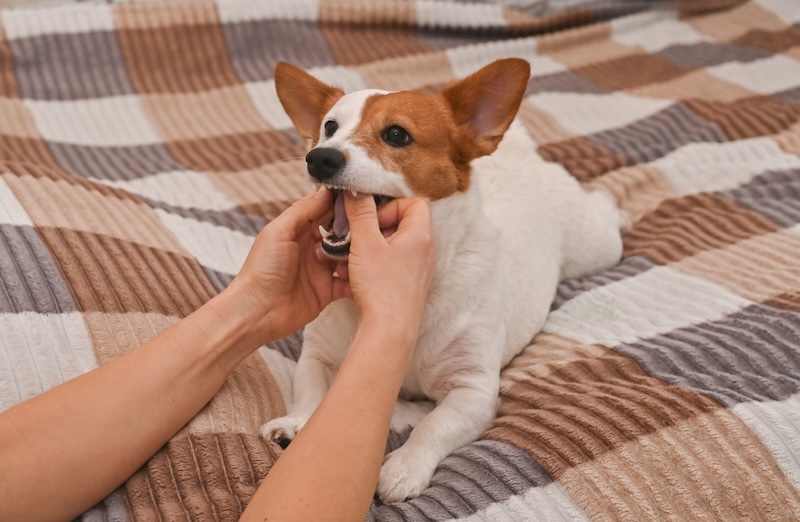
If your puppy brings you a toy instead of grabbing your sleeve, reward her with plenty of praise. This is behavior you want to encourage.
Alongside training, complete and balanced nutrition, fresh water, veterinary care, suitable exercise, and enrichment support overall wellbeing. Food isn’t a solution for biting. This guide to taking care of a dog covers everyday essentials.
With patience and the right support, you and your floof can enjoy more comfortable playtime together.
Frequently asked questions
How long does the biting phase last in puppies?
Puppies enter their biting phase around 8 weeks old, according to vet experts such as the Fox Creek Veterinary Hospital. Most puppies have adult teeth by 6 months, which may curb chewing on socks and shoes, but it may not end playful nipping unless you’ve consistently trained them.
Can a dog ever be fully trained not to bite?
Training can improve gentle interaction and reduce the risk of biting, but it doesn't guarantee that your dog will never bite. Fear, pain and stress can affect your dog’s behavior, making ongoing training important.
What should I do if my dog’s biting gets worse despite training?
If you’ve identified what typically causes your dog to bite and avoided those triggers but your dog keeps biting, contact your veterinarian. Your goal is to avoid bite triggers and manage your dog’s environment so he feels safe and doesn’t bite anyone.
- American Society for the Prevention of Cruelty to Animals. Mouthing, nipping and play biting in adult dogs. (opens in a new tab)
- Cohen, A. (2025, October 21). Recognizing pain in dogs. Cornell University College of Veterinary Medicine, Cornell Richard P. Riney Canine Health Center. (opens in a new tab)
- Collaborative for Shelter Dogs. Dog communication and body language. Cummings School of Veterinary Medicine at Tufts University. (opens in a new tab)
- Fox Creek Veterinary Hospital. (2026, April 7). Puppy biting too much? When to see the vet. (opens in a new tab)