

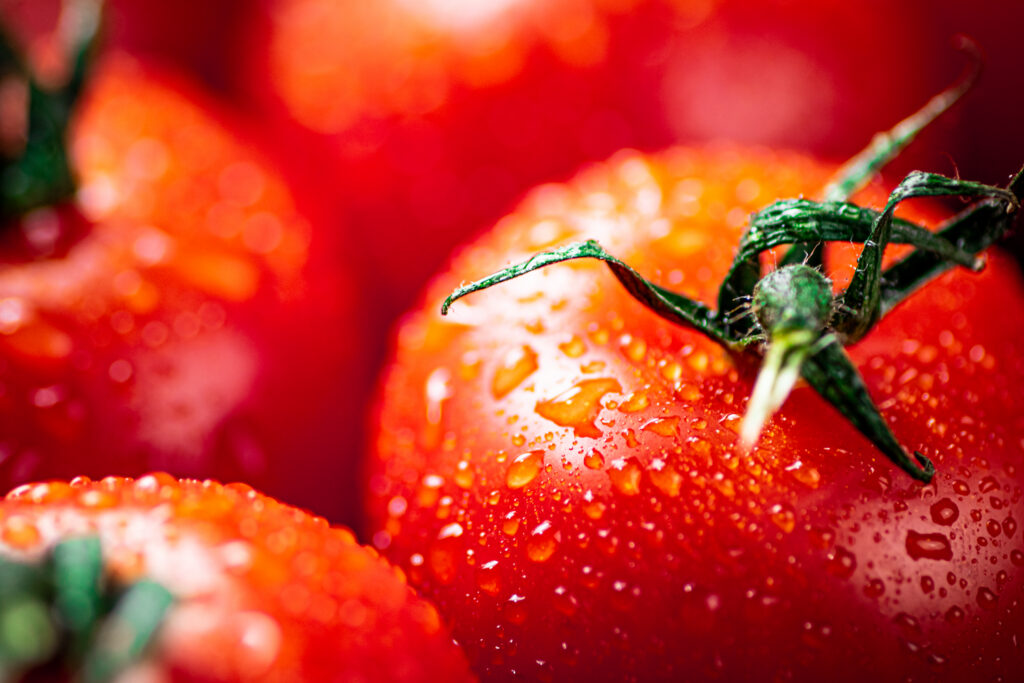
Tomatoes are a kitchen staple in most households, including those with pets. If you’re a dog owner who loves to share with your pup, you may wonder if tomatoes are OK to include in their diet.
Ripe tomatoes are safe for dogs to eat in small amounts. However, some parts of the tomato plant are mildly toxic. Here’s what to know about offering your dog tomatoes as an occasional treat, including which parts of the plant are safe, which to avoid, how much to feed, how to serve tomatoes safely, and what to do if you think your pet consumed too much.
Are tomatoes bad for dogs?
Most healthy dogs can safely consume small amounts of ripe tomatoes. Red tomatoes are the fruits of tomato plants. The flesh of a ripe tomato contains low levels of a glycoalkaloid compound called tomatine, which breaks down as the fruit ripens and turns red.
Tomatine can make dogs (and people) sick when consumed in very large amounts, but documented tomato toxicity is rare. That’s because stems, leaves, and vines contain much higher concentrations of tomatine as well as another compound, solanine, than the fruits.
When your dog is healthy and eats nutritionally complete, balanced dog food, tomatoes can be a healthy occasional treat. If your dog has health or digestive issues, check with your vet before adding anything new.
Benefits of tomatoes for dogs
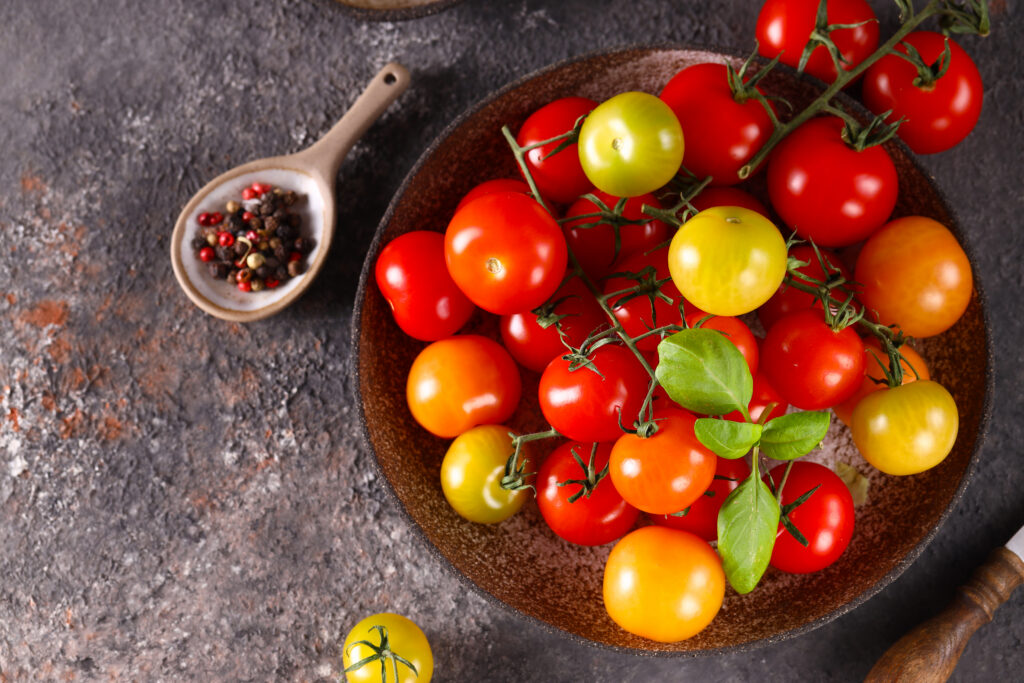
Ripe, red tomatoes ready to be pulled from the vine or those you can purchase in the grocery store contain nutrients that may help to support overall health and well-being. Here’s what’s inside:
-
- Vitamin C: This vitamin acts as an antioxidant and may help support immune function.
-
- Vitamin A: Vitamin A is important for eye, skin, and immune health.
-
- Fiber: Tomato fiber can help support digestive health and stool quality.
-
- Potassium: This mineral and electrolyte supports muscle and nerve functions.
-
- Lycopene: Lycopene gives red tomatoes their color and acts as an antioxidant to help protect cells from damage.
Tomatoes contain nutrients that make them a healthy occasional snack you can feed to your dog if you’d like. However, complete, balanced dog food contains many of the same nutrients, so you can consider tomatoes optional for your pup.
When can tomatoes be harmful to dogs?
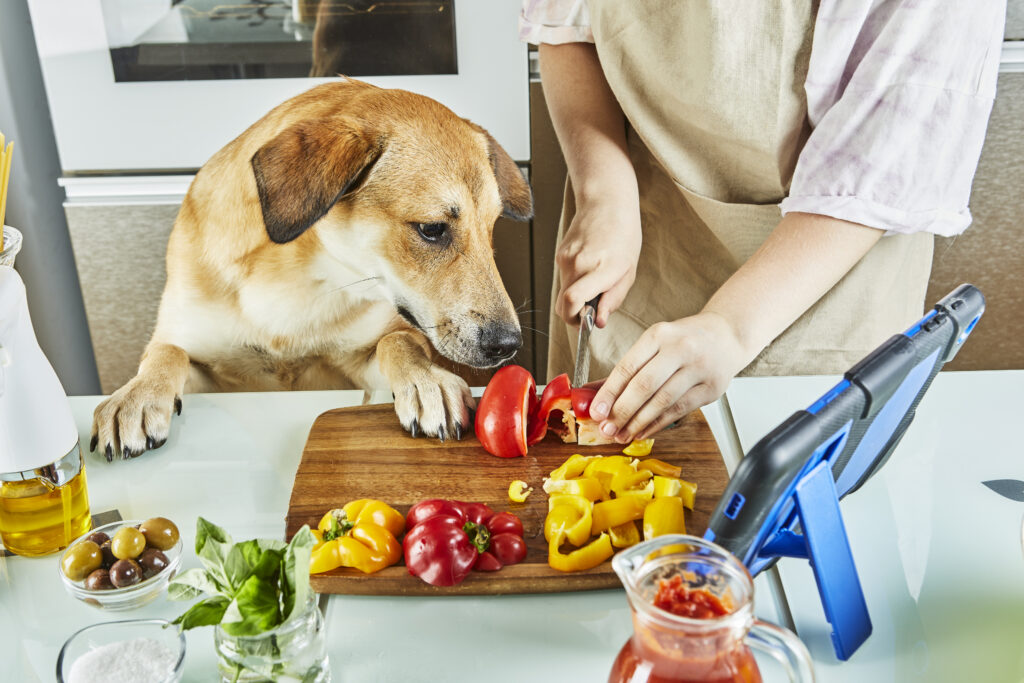
Tomatoes are rarely harmful to dogs. However, dogs who consume unsafe parts of the plant or very large quantities may develop digestive or neurologic issues. Here’s what to avoid when feeding tomatoes to your dog.
Green, unripe tomatoes
Green tomatoes contain higher concentrations of tomatine than ripe red tomatoes do. A dog who eats a small nibble of an unripe tomato may be fine, but larger quantities can lead to stomach upset, vomiting, or diarrhea.
Tomato stems, leaves, and vines
The stems and leaves of the tomato plant have the highest levels of tomatine and solanine. If your dog has access to a garden where you grow tomatoes, consider fencing off the area or supervising your pup closely to prevent them from chewing on the plant.
Tomatoes in large amounts
Even ripe tomatoes can cause gastrointestinal upset if your dog eats too many at once. Tomatoes are naturally acidic, which can irritate the stomach lining and lead to vomiting or loose stools. Feeding them in moderation helps avoid these issues.
Tomato allergies or sensitivities
Although rare, it’s possible for a dog to be allergic to tomatoes. Allergy symptoms may include itchy skin, hives, or digestive problems. Dogs with food allergies or other health conditions should only try new foods under veterinary guidance.
Tomato products
Tomato sauce, pasta sauce, ketchup, canned tomatoes, tomato soups, and seasoned tomatoes may contain garlic, onions, spices, or artificial sweeteners such as xylitol, which is toxic to dogs. They may also contain excess sugar or salt.
How much tomato can my dog eat?
Treats of any kind, including tomatoes, should make up no more than 10% of your dog’s daily calories. The rest should come from a complete and balanced dog food designed for your pet’s life stage.
Here are general serving guidelines for offering fresh tomatoes to dogs:
| Dog size | Serving size | Frequency |
| Extra-small (under 10 lbs) | Half a cherry tomato or half a slice | Weekly |
| Small dogs (10–20 lbs) | One cherry tomato or one thin slice | Weekly |
| Medium (21–50 lbs) | Two cherry tomatoes or one to two slices | Weekly |
| Large (51+ lbs) | Three to four cherry tomatoes or two slices | Weekly |
When you introduce tomatoes for the first time, start with a small amount to see if your dog enjoys eating them and monitor for any problems before offering more. Note that the amounts and frequency in the table above are only a suggested starting point—check with your dog’s veterinarian before adding anything new.
Signs your dog may have eaten too much tomato
If your dog eats a large amount of tomatoes, green tomatoes, or green parts of the tomato plant, monitor them closely for the following symptoms:
-
- Vomiting or diarrhea: These are the most common signs of gastrointestinal upset from eating too much tomato or ingesting parts of the plant.
-
- Weakness or lethargy: A dog who feels unwell after eating tomato may be less active than usual or reluctant to move around.
-
- Excessive drooling: Nausea from tomatine or solanine consumption can cause increased salivation.
-
- Loss of coordination: Dogs who ingest excessive amounts of tomatine may have difficulty walking or seem unsteady on their feet.
-
- Tremors or a fast heartbeat: These symptoms could result from severe tomatine toxicity or if your dog eats something else toxic in addition to tomatoes.
Tomatine poisoning is uncommon, and most dogs who eat a small amount of ripe tomato will be just fine. However, you should consult a veterinarian if your dog shows any unusual behavior, develops concerning symptoms, or has consumed stems, leaves, or large quantities of green tomatoes.
The signs of tomatine poisoning are similar to those of other types of toxicity in dogs. If your pup gets sick after eating just a bite or two of ripe tomato, they may have eaten something else toxic like xylitol or chocolate. Always seek veterinary advice if you have concerns about your pet’s health.
Safe ways to feed tomatoes to dogs
If you’d like to share a bite of tomato with your pup, follow these tips to keep them safe:
-
- Serve only ripe, red tomatoes: Choose tomatoes that are fully ripe. Avoid any fruit that still has green spots, and don’t feed your dog green tomatoes.
-
- Remove stems and leaves before serving: Always pull off the stem and any attached leaves before offering tomatoes to your dog.
-
- Offer small portions: Cut the tomato into bite-sized pieces to avoid overfeeding, especially for small dogs.
-
- Serve tomatoes plain: Serve fresh tomatoes without salt, seasonings, oils, or sauces to avoid harmful or toxic additions present in some products.
-
- Introduce tomatoes gradually: Like any new food, add tomatoes to your dog’s diet slowly. Start with a small piece, then wait a day or two before offering more.
-
- Wash tomatoes thoroughly: Rinse fresh tomatoes under running water to remove dirt and any pesticide residue before serving.
Support your dog’s health with balanced nutrition
Ripe, red, plain tomatoes can be a tasty occasional treat for many dogs. Tomatoes contain beneficial antioxidants and fiber, and many dogs enjoy the taste. However, some dogs may not like tomatoes or may experience digestive upset if they eat too much.
You can take the guesswork out of feeding by choosing treats designed specifically with a dog’s nutritional requirements in mind. For everyday rewards in a ready-to-serve format, check out JustFoodForDogs whole-food treats. With human-grade ingredients you can easily recognize, you can feel confident about including them as part of your pup’s complete and balanced diet.
Frequently asked questions
The post Can Dogs Have Tomatoes? Healthy Benefits and Feeding Tips appeared first on JustFoodforDogs Blog.